The idea
The story began when Zahra* mentioned that Malaysia was considering banning plastic shopping bags, including some reusable options.
‘Could we make some bags for sale in our shop?’ she asked.
I replied, ‘I’ve made simple bags out of old material before. What materials do we have available?’
The answer was unexpected: jeans.
Many people arriving in Malaysia donated their jeans after discovering they were impractical in the hot, humid climate. Although the donated clothing was appreciated, the jeans rarely sold for the same reason they had been given away in the first place.
‘Let me have a couple of pairs,’ I said, ‘and I’ll see what I can do.’
Developing the design
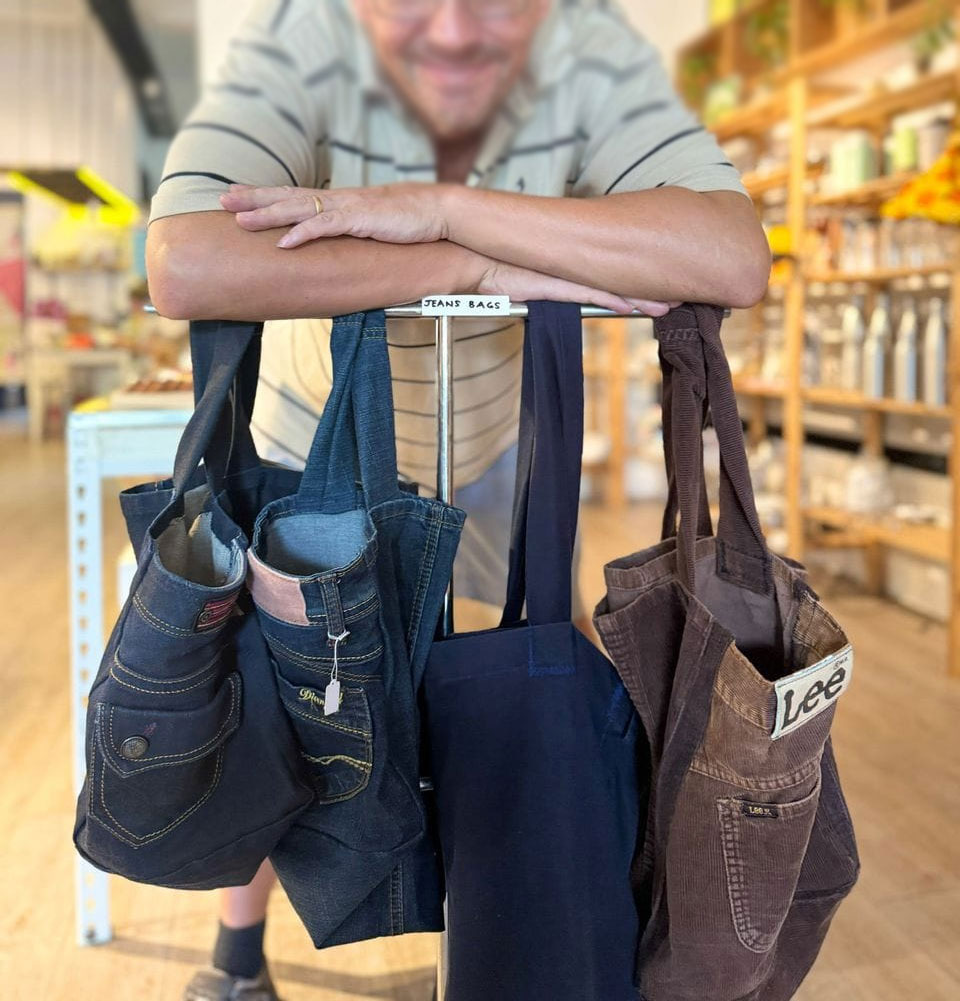
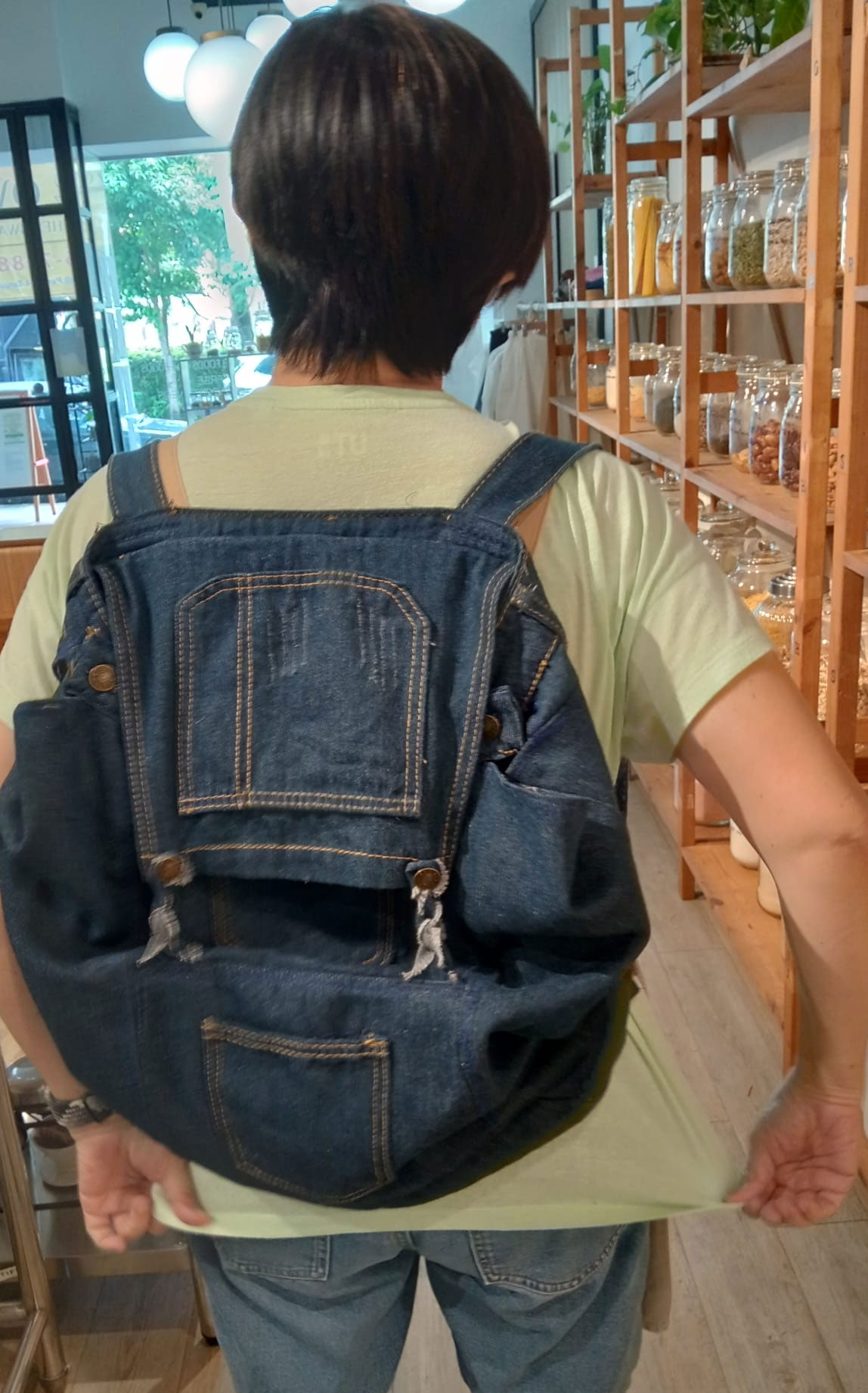
From that conversation, a new bag design began to take shape. As I experimented, the bags gradually improved in both quality and the speed with which they could be produced. Along the way, we settled on several principles that guided the project.
Design aims for the jeans bags
- One pair of jeans, one bag.
The goal was to honour the original resource. Rather than cutting up denim simply because it no longer had commercial value, the aim was to transform something unwanted into something useful again. - Minimal waste.
Large jeans became large bags, making use of as much material as possible. While some waste remained, particularly around pockets and zips that were difficult to incorporate, the design kept discarded material to a minimum. - Durability.
A denim bag should last for years. The bags are machine washable, hard-wearing, and can be repaired if needed. - Reasonable cost.
The selling price does not fully reflect the time involved in making each bag. Each one is slightly different, making each bag a unique item. - Fun and practical design.
Making the bags has been enjoyable, and I hope people enjoy using them as much as I enjoyed creating them.
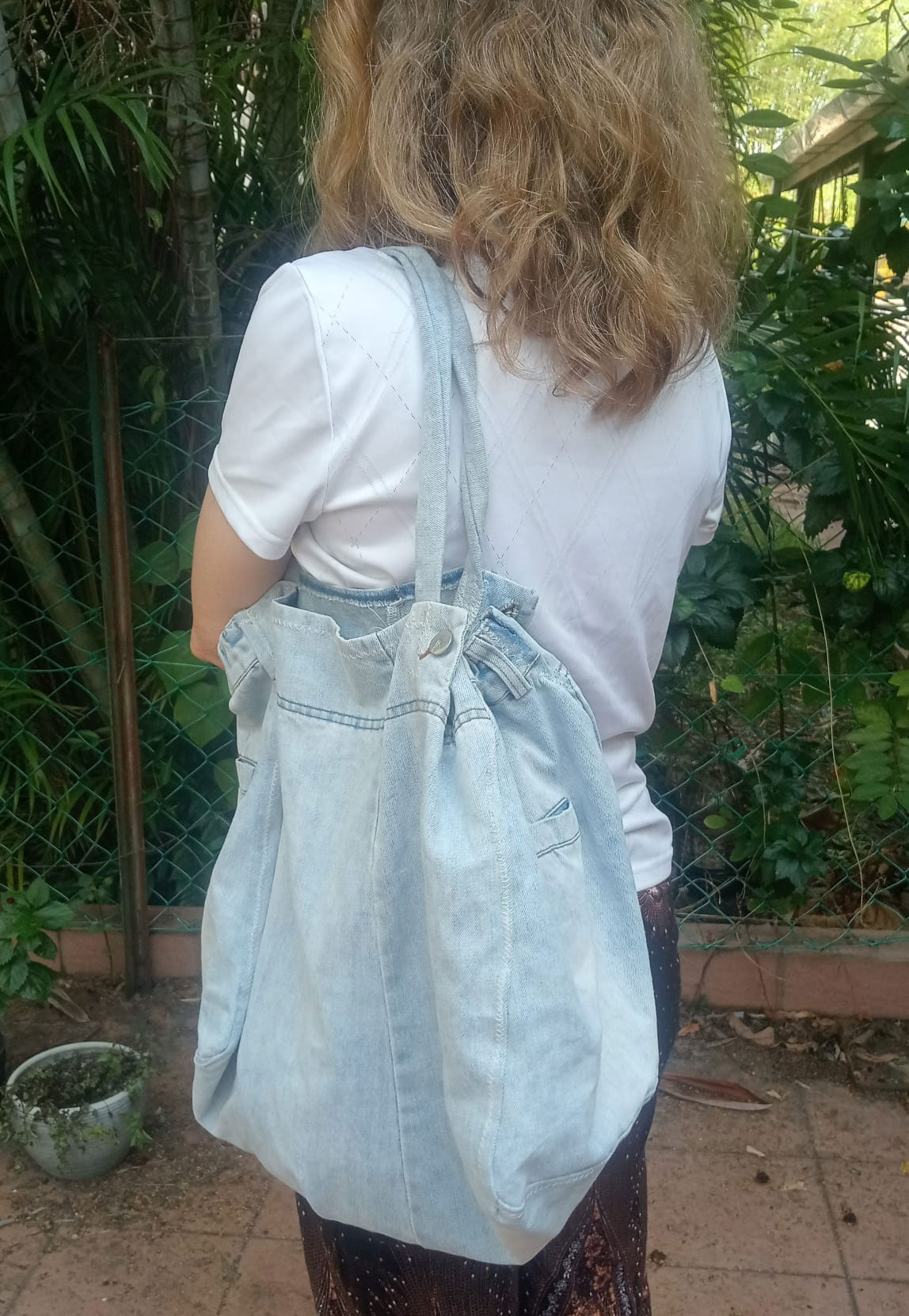
Although the proposed plastic bag ban never fully came into effect, the idea had already proved successful. The bags continued to sell, and the project became a stepping stone to new opportunities and conversations.
A new conversation
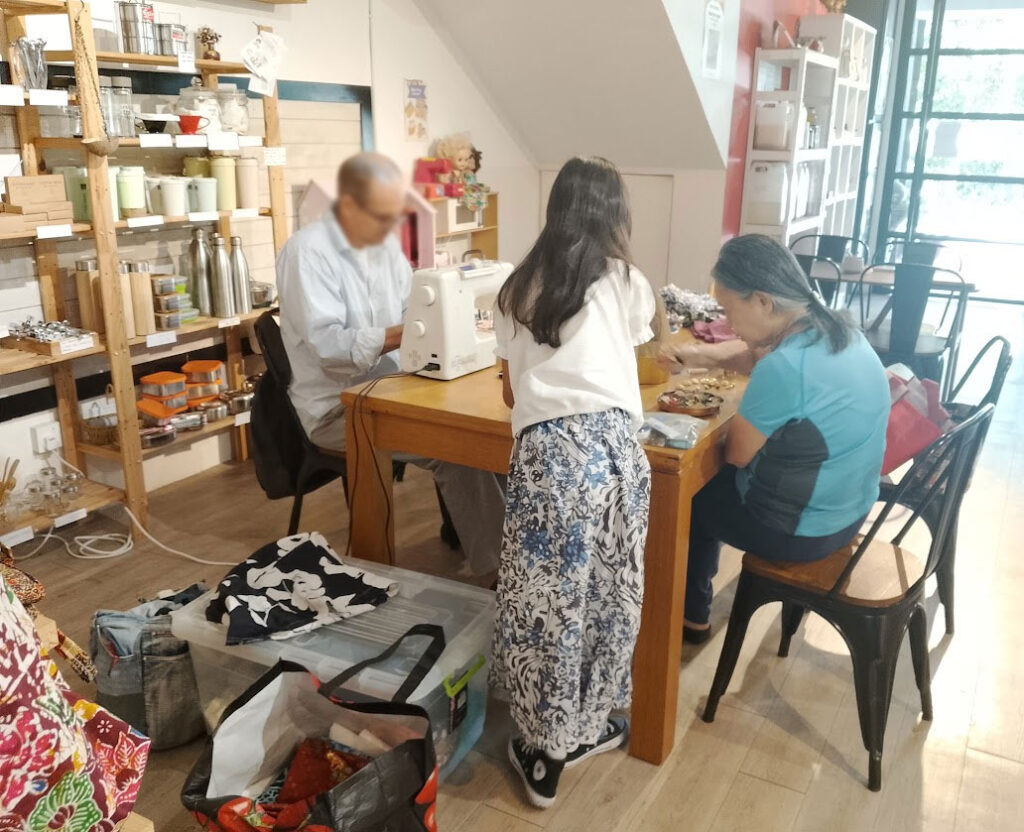
As time went on, I moved from making bags at home to sewing at a table in the shop and café. The change was intentional. More than producing bags, I wanted to create opportunities for conversation.
One day, a former Singer sewing machine employee visited the shop. While I worked on my bags, he serviced and repaired a couple of sewing machines. In reality, he did most of the work while I spent my time watching, learning, and chatting with him.
That experience revealed something important. Many people in the community owned sewing machines but lacked the confidence to use them. Others had machines that needed servicing but didn’t know where to start.
So I began inviting people to bring their sewing projects to the shop.
Some came to have their machines repaired before learning to use them. Others simply brought projects and used the sewing machines we had available. Occasionally, someone would arrive with a project they wanted me to help complete.
More than sewing
What began as a practical project to make reusable shopping bags soon became a way of bringing people together. The sewing table became a welcoming space where people could spend time together, learn new skills, and share stories.
People as young as eight and as old as sixty-eight have gathered around the sewing machines. Islanders and international visitors alike have joined in, coming from places as diverse as China, Poland, and the United States.
The bags may have been the starting point, but they were only part of the story. The greatest impact has been the friendships, shared learning, and sense of community that grew along the way.
From unwanted jeans to meaningful conversations, John’s story shows how God can use simple ideas to make a lasting impact. By praying, giving, or becoming a member of the World Horizons movement, you can help create spaces where friendships grow, communities flourish, and lives are transformed. We’d love you to be part of the story.
*Names changed for reasons of security.